 For a better experience on Ocean Frontiers, Update Your Browser.
30 Years of Ocean Frontiers: Three Decades of Building East End into a World-Class Dive Destination
- Brian Hellemn
- February 14th 2026
How three friends and their hand-built dive boat turned Grand Cayman's East End into a world-recognized diving destination.
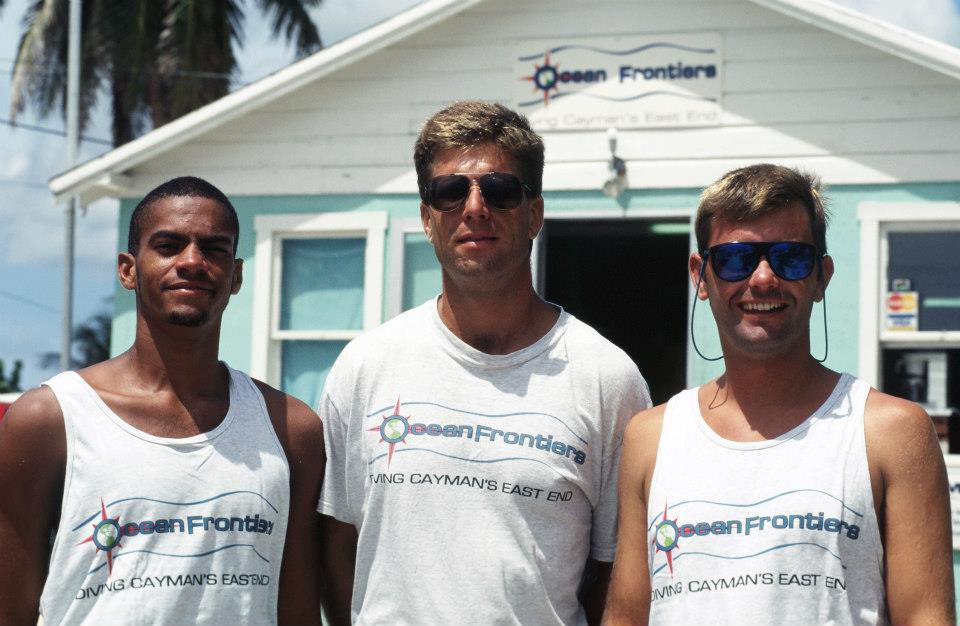
Thirty years ago today, three friends delivered a boat they'd built themselves to Grand Cayman's remote East End.
Just a hand-built dive boat called Nauti-Cat, and a vision to bring the incredible diving of the East End to divers from around the world, and to give them the most memorable experience possible while they do it.
That was Valentine's Day 1996.
No big resort complexes or tourist traps. Just world-class walls, crystal visibility, and incredible marine life that few before them had even seen before. Its particular location, topographical features, and distance from the Island's population centers gave East End a competitive advantage of being a true hidden gem, deceptively keeping the best of Grand Cayman's marine environments sheltered from the masses. With no other major dive operations servicing the area - the three founders saw their opportunity to leave a lasting legacy in what would be become a world-renowned diving destination.
Today, Compass Point Dive Resort sits with its 27 condominium units just steps from the dock. The fleet includes three custom-built Newton dive boats. Ocean Frontiers and Compass Point have combined to earn recognitions and awards from around the industry. And the founders are still running the operation.
Here's the story of Ocean Frontiers and Compass Point since the beginning in February 1996:
Chapter 1: The Early Days (1996–2000)
Finding the Frontier
In 1996, Grand Cayman's East End was the island's best-kept secret. The famous Seven Mile Beach resorts dominated the dive tourism industry. The walls and pinnacles off the East End? Largely unexplored by visitors.
The founders saw something different. They saw pristine coral formations and dive sites that told stories—named after local characters and geological features.
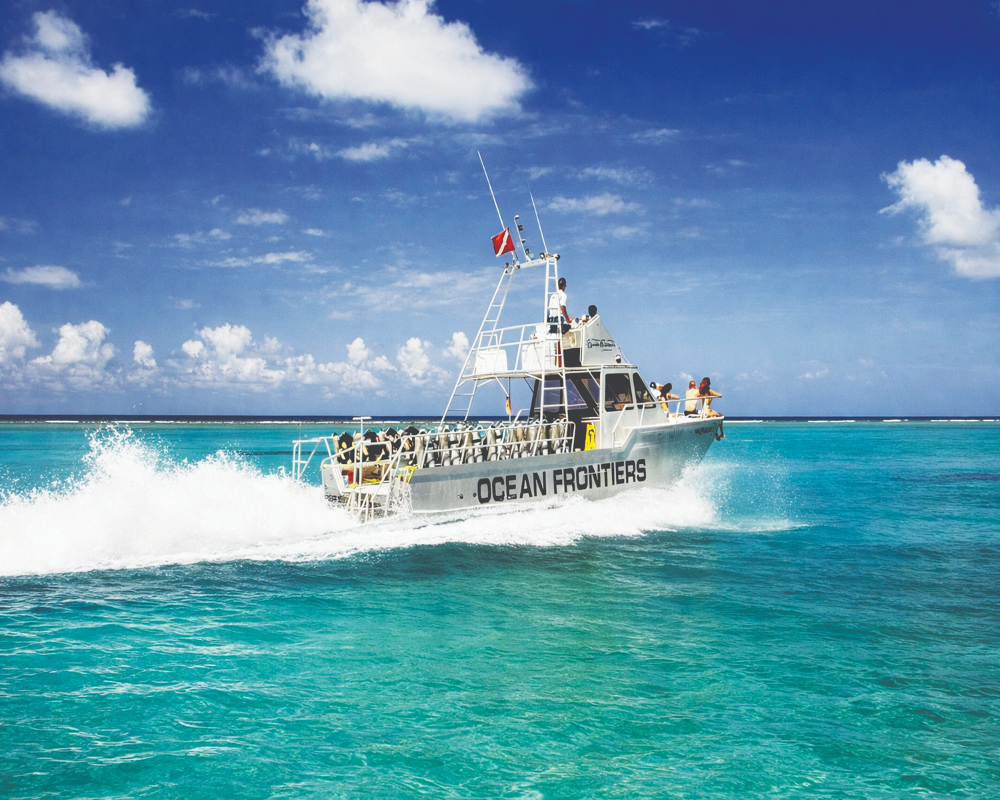
Nauti-Cat became the first vessel. The East End was the frontier.
And Ocean Frontiers was born.
Putting Down Roots
By 1998, the operation was ready to grow. Ocean Frontiers purchased its first compressor, acquired an ocean front lot, and built a wooden dock that would become the staging ground for thousands of dive adventures.
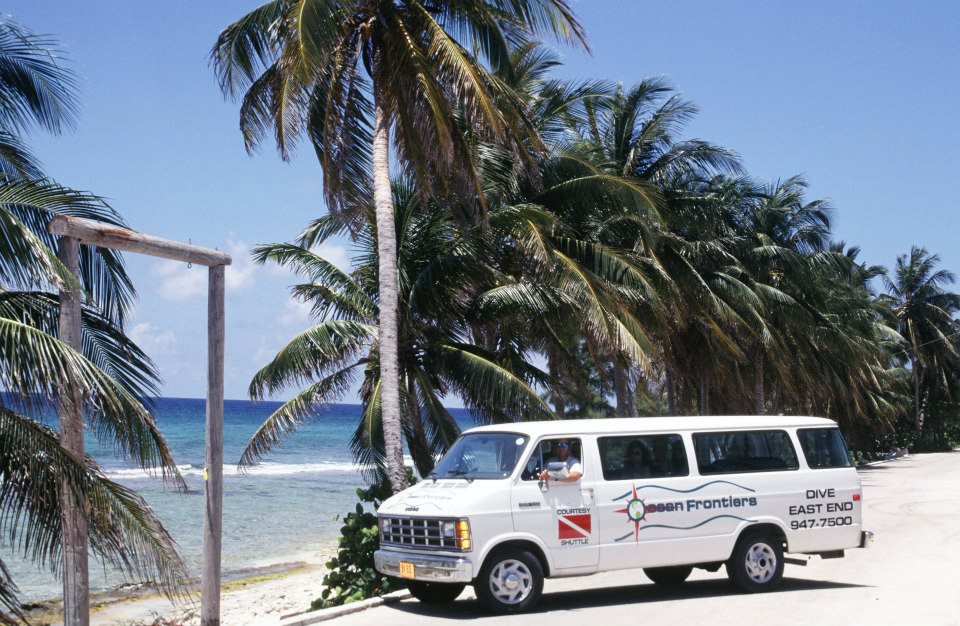
That same year, something else happened—something that signaled the kind of operation Ocean Frontiers would become.
The founders were committed to customer service and staying at the industry's leading edge. Ocean Frontiers was among the first Cayman operators to use Nitrox, initially introducing it as a safety measure for dive staff managing a busy dive schedule.
As Nitrox gained industry-wide acceptance and customer demand grew, Ocean Frontiers became one of the few operations on Grand Cayman offering it to guests. That focus on service and safety paid off: in 1998, readers of Rodale's Scuba Diving Magazine voted Ocean Frontiers "World's Best Dive Operator" in the Readers' Choice Awards.
By 2000, the property had a dedicated dive shop, pool, and workshop. The foundation was set.
Chapter 2: Building, Innovating, and Overcoming
Pioneering Shark Diving and Awareness
In the early 2000s, Ocean Frontiers introduced Cayman's first and only shark diving program, partnering with the Guy Harvey Research Institute and Mote Marine Laboratory to conduct research while offering guests classroom sessions on shark biology and conservation. Divers experienced as many as 8 to 16 reef sharks up close on each dive.
Despite an immaculate safety record and well-run program, local government regulations eventually restricted shark feeding operations, and the program was discontinued. But the pioneering spirit—and the commitment to combining adventure diving with marine science—became part of Ocean Frontiers' DNA.
The Spawn That Changed Everything
One of the most significant Milestones and Ocean Frontiers history happened in the early years, with Steve Broadbelt working closely with his friend Dr. Alex Mustard—award-winning underwater photographer and marine biologist—to track and predict the spawning cycles of corals in Grand Cayman, East End, to accurately predict the exact timings of the coral spawning.
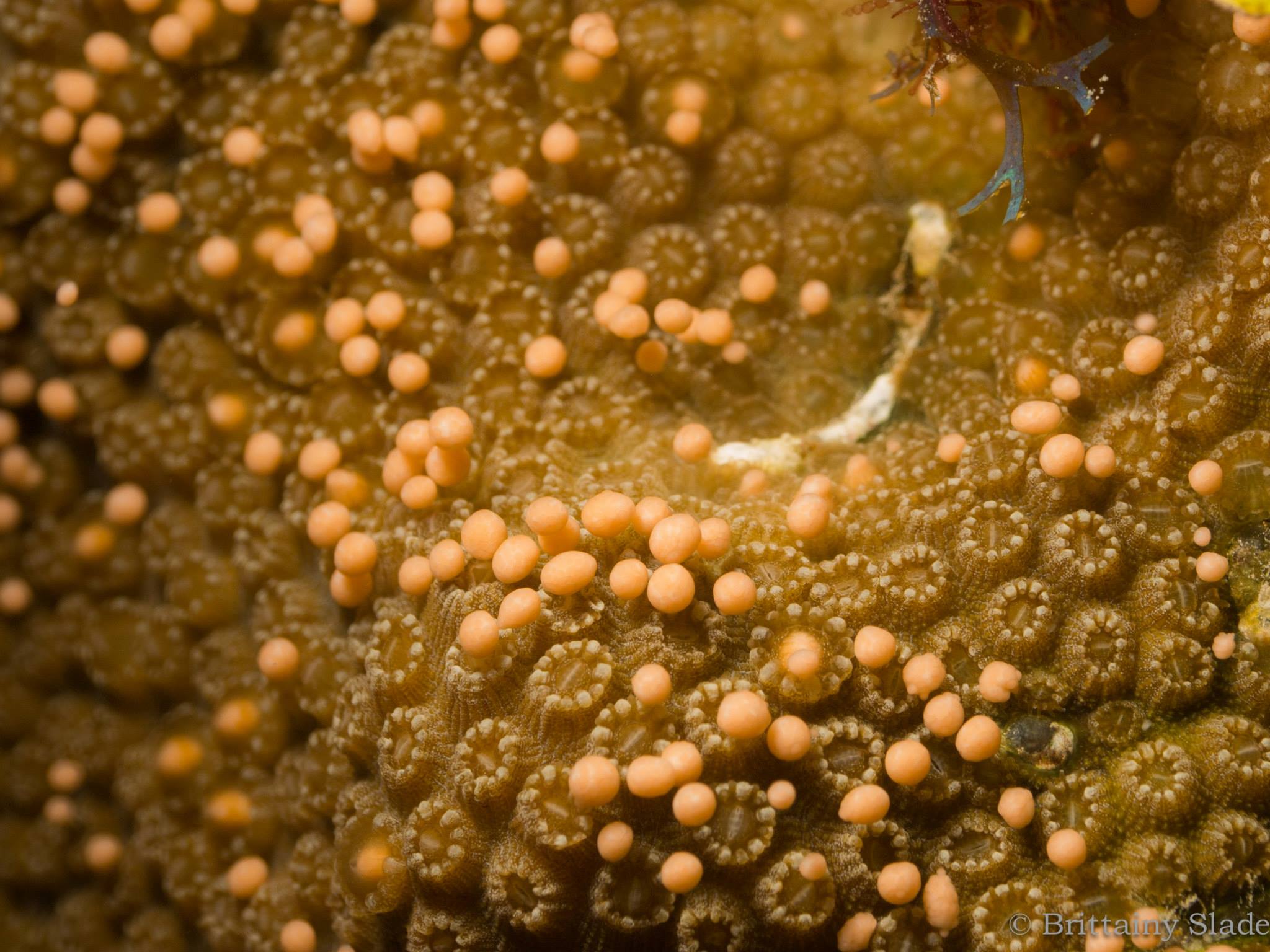
Their goal: to be able to predict the exact times every year that the corals spawn - and to do this with reliability and accuracy so they could bring people down to witness the incredible natural phenomenon
Alex decoded the pattern: three environmental cues had to align. Annual temperature cycle. Monthly tidal rhythm. Daily light window. Get all three right, and the corals would show up. "I'd gone through all the data, and I believed the numbers," Alex later explained. "When you're going out to do a dive at 10 p.m. on the final night, you've really got to believe in it."
Steve Broadbelt believed in Alex's passion—even if the outcome seemed uncertain. "Steve believed in the passion I had for it, but he never really thought we were going to see it," Alex recalled.
But Ocean Frontiers committed. With several years of work and refinement, Alex and Steve cracked the code of Coral Spawning in Grand Cayman. Since then, Ocean Frontiers has observed coral spawning for with a 100% track record. That discovery marked a turning point. Ocean Frontiers wasn't just a dive operation anymore - it was one of the early signs that Ocean Frontiers had a bigger role to play than simply operating a dive boat.
Building Compass Point
Beyond the hand-built dive boat and hand-built wooden dock - the dream for Steve, Mo, and Troy had always been bigger. What if guests could wake up, grab coffee, and walk directly onto the vessel? What if the entire vacation—diving, dining, relaxing—happened in one place, without shuttles or transfers or wasted time?
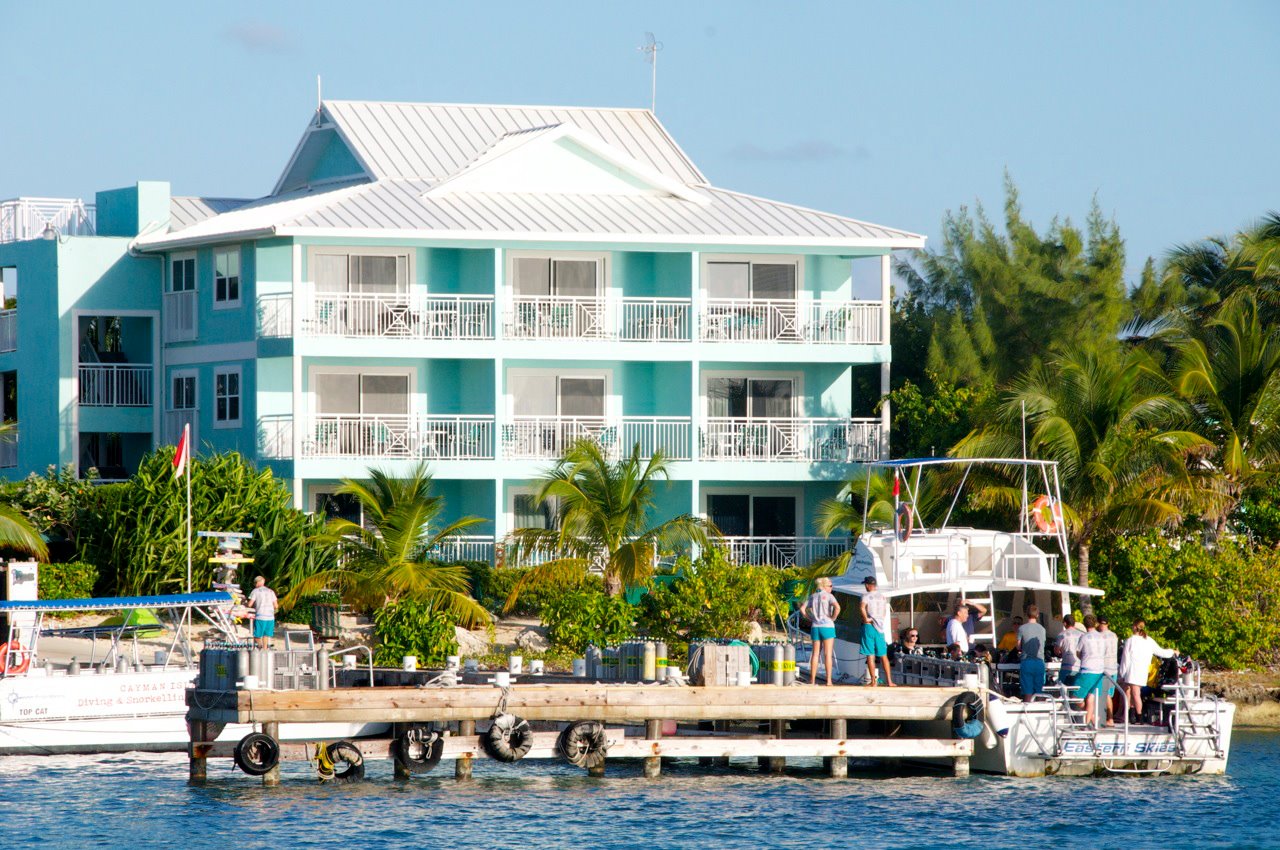
In 2003, Compass Point Dive Resort Phase 1 opened. The land-based liveaboard concept and the motto “Roll out of bed and onto the dive boat” was born. It represents more than just a tagline - its a an embodiment of our philosophy and the action we take to deliver on it.
Weathering Ivan
In September 2004, Hurricane Ivan hit Grand Cayman as a Category 5 storm. Ninety-five percent of the island's buildings were damaged or destroyed. Storm surge inundated nearly the entire island.
Ocean Frontiers' facilities suffered significant damage.
The choice was simple: rebuild or walk away.
We rebuilt.
The crew, the community, the guests who'd become family—everyone pulled together. Recovery was slow. Many areas were without power or water for months. But within the next year, we were back on the water and moving forward.
That resilience would be tested again. It always is in the Caribbean.
But Ivan taught us something important: this place, these reefs, these relationships—they're worth fighting for.
Completing the Vision
Compass Point Phase 2 opened in 2009–2010, adding more oceanfront accommodations. Then, in 2012, Eagle Rays Bar & Grill opened on-site.
The vision was complete. A full-service dive resort where guests could dive all day, eat steps from their room, and never touch a car key. The land-based liveaboard, fully realized.
Chapter 3: Conservation in Action
Somewhere along the way, "environmental awareness" became a marketing checkbox. Some operations slap green logos on their websites and call it a day. That's not how it works here.
Conservation at Ocean Frontiers isn't a campaign. It's embedded into our dive staff training, the conservation briefings before each X-Dive. The way we interact with the reef every single day on our 2-Tank dive trips.
It doesn’t stop there - the real work and impact comes outside of the day-to-day operations, and the role we’ve played in the conservation history of Grand Cayman.
East End Moorings: 10 to 40+ Sites
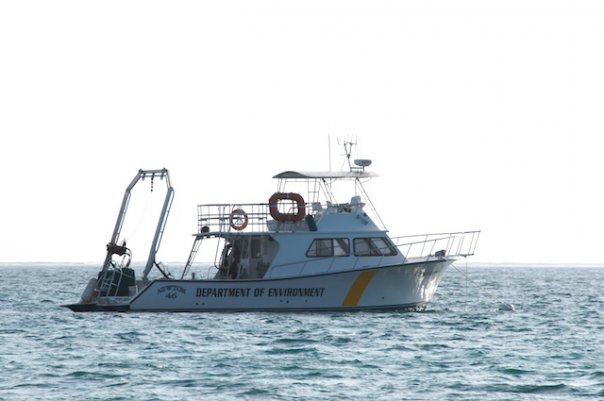
Ocean Frontiers worked directly with the Cayman Islands Department of Environment to help increase public moorings in the East End from 10 to 40+ dive sites, opening pristine reefs while protecting them from anchor damage.
This East End-specific achievement was part of the broader Dive 365 program, which ultimately installed over 365 permanent mooring buoys at dive sites across all three Cayman Islands—infrastructure that protects reefs and will remain for generations of divers to come.
Shark Research Support
Ocean Frontiers has been a field supporter of the DoE's Shark Conservation Cayman project since its early years. The team hosts shark education seminars for guests before dives in areas with regular shark activity, and dive staff participate in the DoE's Sharklogger citizen science network—logging sightings on nearly every dive to help researchers track population trends. Steve Broadbelt stopped offering shark feeding dives back in 2002 when regulations first came in, well before the 2015 sanctuary law made it official. More recently, Compass Point hosted screenings of the DoE documentary Tagged & Tracked, which follows the research team as they tag and monitor sharks across all three islands.
The Lionfish War
When invasive lionfish appeared in Caribbean waters, they threatened to devastate native fish populations.
Beautiful, venomous, and breeding at alarming rates, lionfish have no natural predators in these waters.
Ocean Frontiers started an active culling program. Crews hunt lionfish on most dives—it's become part of the routine.
The program continues today.
Coral Nursery and SCTLD Response
In 2016, Ocean Frontiers launched Grand Cayman's first and largest coral nursery, spearheaded by Lois Hatcher.
With the first coral trees installed during Earth Day celebrations, the program started with 25 coral trees and expanded to 60. The nursery was engineered to grow and then outplant endangered Staghorn and Elkhorn corals for out-planting to damaged reefs, with dive and crew support for maintenance and monitoring provided by Ocean Frontiers.
When Stony Coral Tissue Loss Disease (SCTLD) emerged as an existential threat to Caribbean reefs, Ocean Frontiers joined the monitoring and response effort. Our crews reported observations, contribute to disease mapping, and follow protocols designed to limit transmission.
Additional Conservation Initiatives
- Coral Bleaching Monitoring & Temperature Data Collection — Partnership with the Department of Environment
- Turtle Release Program — Active sponsor
- Teens4Oceans & Ocean Classrooms — Educational program sponsor supporting marine science education for young Caymanians
- Green Shorts Challenge — Program to distribute diver load evenly across East End sites, reducing pressure on popular reefs
Chapter 4: The Bigger, Bolder Ocean Frontiers + Compass Point
Expanding the Reach
In 2016, Ocean Frontiers opened an office at Wyndham Reef Resort, giving easy access to guests staying at the larger resort just down the road.
Fleet Transformation
Between 2017 and 2019, Ocean Frontiers invested over $1 million in a complete fleet transformation: three custom-built 46-foot Newton dive boats—Gun Bay Diver, Sparrowhawk Diver, and Half Moon Diver.
Each features proprietary layouts with individual tank stations, liveaboard-style ladders, business-class pods, and eco-friendly engines.
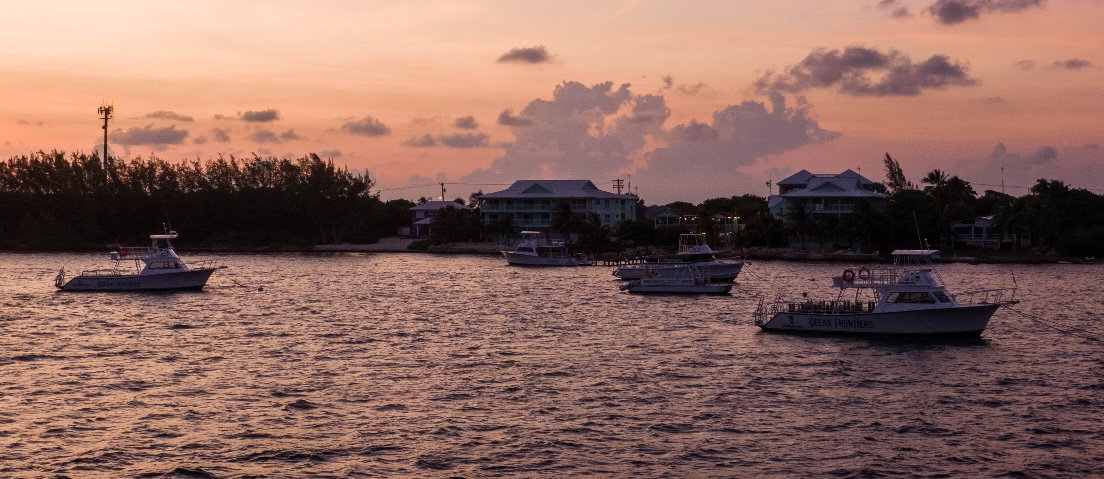
Limo-style dive boats, designed by divers, for divers.
Because the Green Shorts Service isn't just about setting up your gear—it's about every detail of the experience from the moment you arrive until the end of your trip.
Chapter 5: Recognition & Awards
Industry Recognition and Honours
In 2023, Scuba Diving Magazine readers voted Ocean Frontiers #1 in all seven Caribbean & Atlantic dive operator categories: Best Overall, Quality of Dive Boats, Quality of Rental Gear, Quality of Facilities, Quality of Staff, Quality of Training and Courses, and Attention to Safety. It was the first time a single operation had taken all seven.
Ocean Frontiers also became recognized as a PADI Green Star Dive Center—continuing the 2012 distinction as the first in the Cayman Islands to receive this recognition. Compass Point picked up resort honors, and the rankings continued through 2024 and 2025.
Ocean Frontiers and Compass Point have been recognized for environmental leadership and operational excellence throughout their history:
- Project AWARE Environmental Achievement Award — 2004, 2010, and 2012
- Green Globe Certification — Compass Point Dive Resort, 2010 (sustainable tourism)
- PADI Green Star Dive Center — First in the Cayman Islands, 2012; continued recognition in 2023–2025
- Governor's Environmental Award for Tourism — Compass Point, 2014
- Green Leader Recognition — TripAdvisor
- 2023 Scuba Diving Magazine Sweep — First operator in history to win all seven Caribbean & Atlantic categories
Looking Forward With Gratitude: The Next 30 Years
Thirty years ago, three divers saw something special in Grand Cayman's East End. Today, thousands of guests from around the world have experienced it for themselves—the walls, the marine life, the crew, and the feeling of diving with people who genuinely care about the reef and everyone exploring it.
Thirty years in, the priorities are the same as they were when Nauti-Cat first showed up in the East End lagoon - happy, safe customers on our boats, above-and-beyond staff, and spectacular East End SCUBA diving and snorkeling.
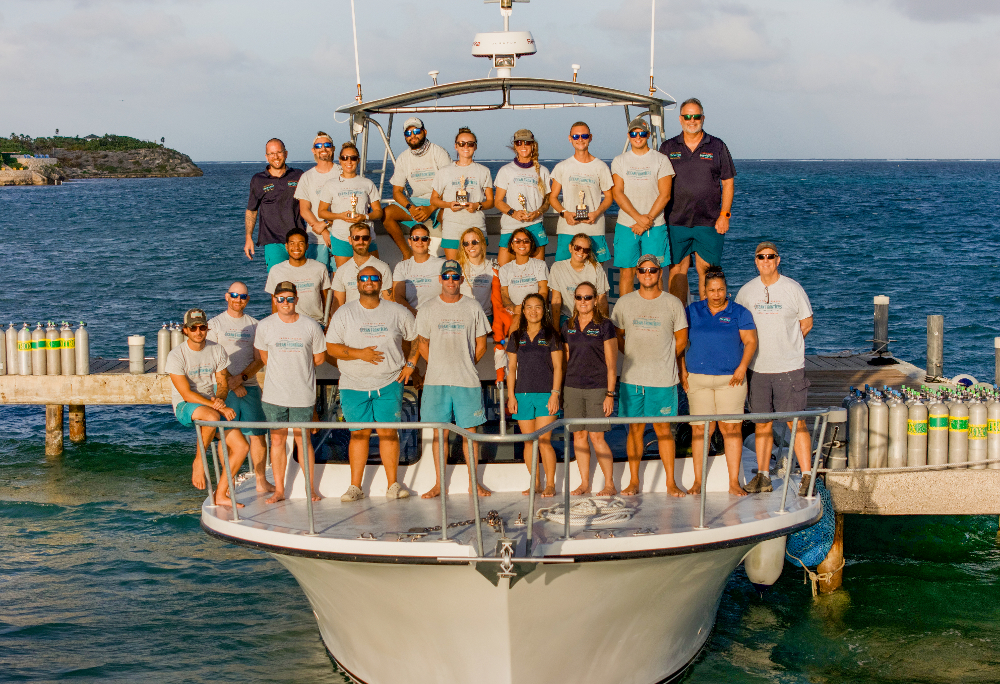
The history of our dive shop, the achievements and honours we’ve enjoyed, and the legacy we’ve built would be nothing without the endless support of our incredible Green Shorts family - the thousands of customers and friends we’ve had the honour and pleasure of serving along the way. Thank you to every guest who's trusted us with your vacation, every crew member who's made Green Shorts Service real, and every partner who's helped us play a role in protecting and preserving our marine environment in Grand Cayman.
As we look forward towards our next three decades ahead, the customer-first philosophy we started with remains our top priority: leaving no stone unturned when it comes to making every experience for our guests a memorable one.